

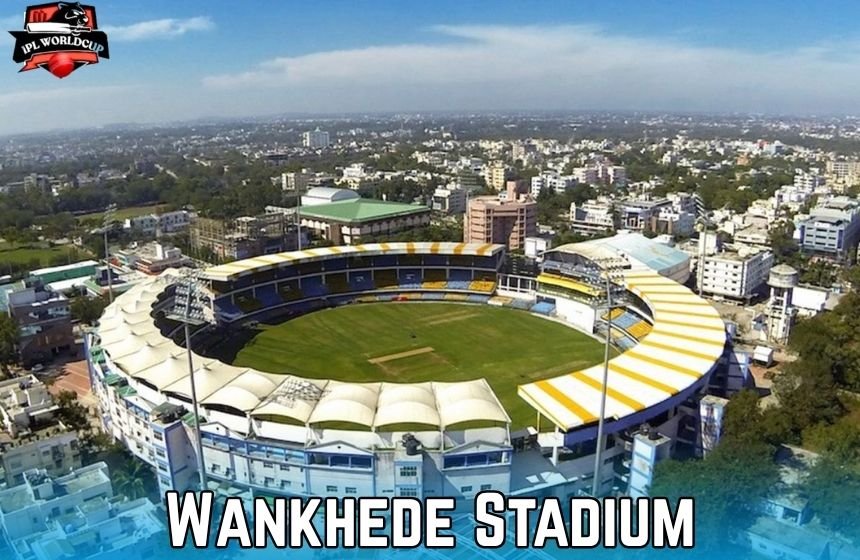
The Wankhede Stadium is one of the most famous cricket stadiums in India and landmark stadium in Mumbai. It is situated in the Churchgate area near Marine Drive and has also hosted Test match, ODI and T20I cricket matches, as well as important ICC cricket events and the IPL.
The stadium is especially known for the ICC World Cup final of 2011 where India beat Sri Lanka with six wickets and also for hosting the last international match of Sachin Tendulkar. It is also the home ground of Mumbai Indians and Mumbai cricket team. This article will give you all the details about Wankhede Stadium such as Pitch Report, Stadium capacity, History, Records, Weather and Major matches.
Wankhede Stadium Overview
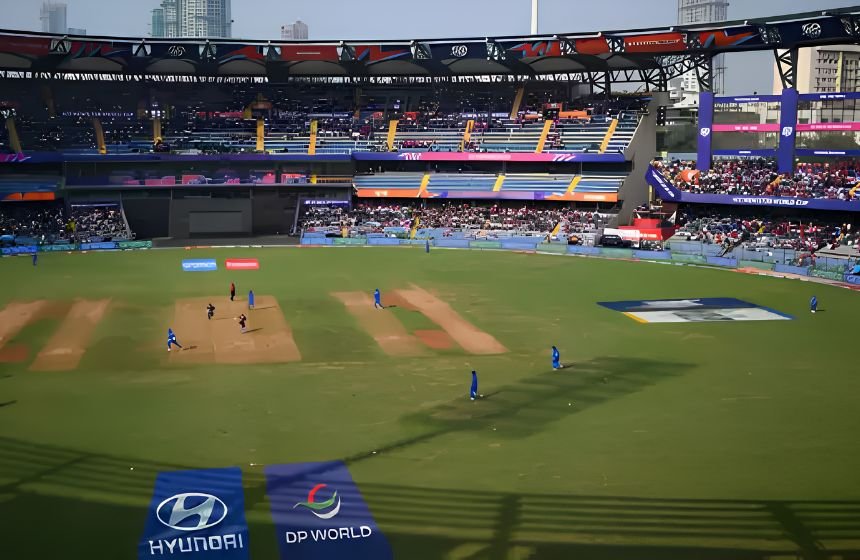
The Wankhede Stadium was built in 1974 and first used for a Test match between India and West Indies in January 1975. It is now one of the most significant international cricket playing grounds in India. The stadium is operated by the Mumbai Cricket Association and has an approximate capacity of 33,100 spectators. It is also the home ground of Mumbai Indians in the IPL and Mumbai in domestic cricket.
| Feature | Details |
| Full Name | Wankhede Stadium |
| Location | Churchgate, Mumbai, Maharashtra, India |
| Established | 1974 |
| First Test | India vs West Indies, 1975 |
| Capacity | 33,100 |
| Home Teams | India, Mumbai |
| IPL Team | Mumbai Indians |
| Ends | Garware Pavilion End, Tata End |
| Floodlights | Yes |
| Pitch Nature | Batting-friendly with pace and bounce assistance |
Wankhede Stadium History and Development
The Wankhede Stadium has a strong association with the city of Mumbai and its cricket culture. Before the stadium was constructed, Brabourne Stadium was the main international cricket venue in Mumbai. A new stadium came into being due to disputes over ticket allocation during the 1973 India vs. England Test match at Brabourne Stadium.
This venue was named after Barrister S. K. Wankhede who was associated with the Mumbai Cricket Association. The ground, since its inception, has witnessed many of the historic cricket matches and has been one of the prime grounds in India.
We are making Wankhede Stadium better and establishing it early. Wankhede Stadium Development and Early Establishment.
They built Wankhede Stadium in approximately 13 months, beginning construction in late 1973 and concluding just in time for the Test match against the West Indies in January 1975. They played the first Test at the ground in January 1975.
The organizers extensively renovated the stadium prior to the ICC Cricket World Cup 2011. They refurbished it to host its final World Cup match with improved spectator space and other enhancements. The Wankhede was later the setting for another iconic moment in November 2013, when Sachin Tendulkar played his 200th and final international match.
Wankhede Stadium Infrastructure and Facilities
Wankhede has a compact design with multiple stands surrounding the playing field. There are a number of stands named after the well known sportsmen and women of India and Mumbai such as Sachin Tendulkar and Sunil Gavaskar. It is also one of the most recognizable cricket grounds in the country as it is centrally located near Marine Drive.
| Feature Type | Description |
| Seating Design | Multiple tiered stands |
| Pavilion | Modern pavilion facilities |
| Floodlights | Available for day-night matches |
| Pitch Type | Red-soil surface |
| Drainage | Modern drainage facilities |
| Outfield | Well-maintained |
| Location | Churchgate, near Marine Drive |
| Major Stands | Sachin Tendulkar, Sunil Gavaskar and other stands |
Wankhede Stadium Pitch Report and Match Conditions
Experts consider the pitch at Wankhede as good for batting in all cricket formats. Players generally hit the ball well and can execute attacking shots. Fast bowlers may get movement and bounce from the new ball, whilst spinners may find themselves to be more effective on a longer match day as the pitch wears.
| Match Phase | Pitch Behavior |
| Early Overs | Good for batting; pacers may get movement |
| Middle Overs | Generally batting-friendly |
| Later Overs | Good for aggressive batting |
| Spin Bowling | Can become useful as the pitch slows |
| Test Matches | Batting-friendly initially, more assistance for bowlers later |
| T20 Matches | Usually high-scoring |
Wankhede Stadium Upcoming Matches 2026–27
Wankhede Stadium continues to feature in India’s international cricket schedule. The announced 2026–27 home season includes a Day/Night ODI between India and Zimbabwe at the Wankhede Stadium, Mumbai, concluding their three-match bilateral series.
| Date | Match | Format |
| 9 January 2027 | India vs Zimbabwe | 3rd ODI |
Note: The timings for cricket matches may be subject to change as per BCCI and other governing bodies.
Also Read: RCB Ka Baap Kaun Hai? The Truth Behind One of IPL’s Most Viral Questions (2026)
Wankhede Stadium Toss Decision: Batting First or Chasing?
The toss decision at the Wankhede Stadium depends heavily on the pitch, weather, dew and format. When the evening dew makes it harder to bowl, chasing can prove tempting in white-ball cricket, but it could also be beneficial to bat first as the surface is likely to be conducive to batting.
| Format | Preferred Decision |
| Test | Bat first can be advantageous |
| ODI | Batting first is often attractive |
| T20 | Depends on dew and conditions; chasing can be useful |
Wankhede Stadium International Matches & Records
Wankhede has also seen a number of international matches take place at the stadium in all three formats of the game, Test, ODI and T20I. It has set a number of major team and individual records and has been a significant venue for the Indian cricket team.
Test Match Records
Wankhede has seen a number of high-scoring Tests, and great performances from bowlers, and has been the venue for over two dozen Test matches.
| Category | Record |
| Total Matches | 29 |
| Average 1st Innings | Around 331 |
| Average 2nd Innings | Around 335 |
| Average 3rd Innings | Around 206 |
| Average 4th Innings | Around 128 |
| Highest Total | 631/10 – India vs England |
| Lowest Total | 62/10 – New Zealand vs India |
| Highest Chase | 165/6 – South Africa vs India |
One of the most astounding performances at Wankhede was Ajaz Patel’s historic 10/119 in December 2021 against India, becoming only the third bowler in men’s Test history to achieve the milestone. (Source verified via BCCI)
ODI Records
Wankhede has consistently played competitive and high scoring ODI bowlers. Teams can score rapidly in the fast outfield, batting friendly environment.
| Category | Record |
| Matches Played | 37 |
| Average 1st Innings | 256 |
| Average 2nd Innings | 205 |
| Highest Score | 438/4 – South Africa vs India |
| Lowest Score | 55/10 – Sri Lanka vs India |
| Highest Chase | 293/7 |
| Winning Pattern | Slight advantage to teams batting first |
The 438/4 result against India in 2015 is among the highlights of Wankhede in 2015.
T20I Records
Wankhede is now an important venue for T20 cricket, as the narrow boundaries and good batting conditions can produce high-scoring games.
| Category | Record |
| Matches Played | 21 |
| Average 1st Innings | 180 |
| Average 2nd Innings | 158 |
| Highest Total | 254/6 – West Indies vs Zimbabwe |
| Lowest Total | Around 97 |
| Highest Chase | 230/8 – England vs South Africa |
| Match Outcome | Relatively balanced |
Wankhede Stadium ICC Events
Wankhede’s has seen the hosting of many ICC tournaments and is one of India’s major international cricket venues.
| Event | Role |
| 2011 ICC Cricket World Cup | Hosted matches and the final |
| 2016 ICC World T20 | Hosted matches |
| 2023 ICC Cricket World Cup | Hosted matches including the semi-final |
| 2026 ICC Men’s T20 World Cup | Hosted the second semi-final |
Wankhede’s most famous match is the 2011 World Cup final. India beat Sri Lanka to win the World Cup on their own soil.
Wankhede Stadium Fan Experience and Atmosphere
Wankhede attracts a passionate Mumbai crowd and creates a sprightly atmosphere. It also sits in the heart of the city in Mumbai, making it accessible for many supporters, and its compactness helps to maintain excitement among spectators during major matches.
| Feature | Experience |
| Crowd Energy | Very high |
| Location | Excellent central Mumbai location |
| Comfort | Modernised facilities |
| Ticket Access | Depends on match and category |
| Atmosphere | Loud and energetic |
Wankhede Stadium Weather and Playing Conditions
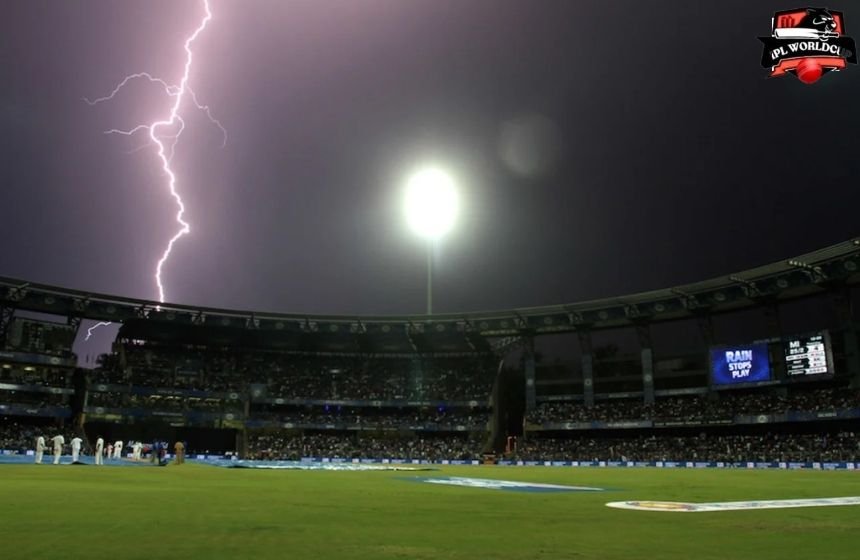
The climate of Mumbai is coastal with hot and humid summers and a heavy monsoon season. Evening humidity and dew can also affect limited overs matches.
| Season | Conditions | Impact |
| Summer | Hot and humid | Physically demanding |
| Monsoon | Heavy rain | Match interruption risk |
| Winter | Relatively cooler | Comfortable for cricket |
| Evening | Humid with possible dew | Can influence chasing |
The cooler season is generally more pleasant for players and spectators and match play depends on the weather conditions on the day.
Wankhede Stadium Famous Cricket Moments
Indian and Mumbai cricket have immensely associated Wankhede Stadium. The Mumbai cricket team and the Mumbai Indians call it their home ground, and it regularly hosts domestic and international cricket matches.
| Area | Contribution |
| International Cricket | Hosts major India matches |
| Domestic Cricket | Home of Mumbai cricket |
| IPL | Home venue of Mumbai Indians |
| Player Development | Platform for Mumbai players |
| Fan Engagement | Strong regional support |
| Major Events | Hosts international tournaments |
Wankhede Stadium Home Teams and Cricket Legacy
The Wankhede has seen many memorable moments in cricket. India beat Sri Lanka six wickets at the 2011 World Cup final. Sachin Tendulkar’s last match at the venue was in 2013. In 2021, Ajaz Patel bowled his historic 10 wicket match against India. The stadium has also hosted numerous memorable IPL performances by Mumbai Indians.
Wankhede Stadium Future Plans and Development
Wankhede Stadium is likely to continue its significance in Indian international cricket and IPL in the future. One of India’s most iconic cricket grounds, it boasts a rich history, sits in the heart of the city, and connects to the Mumbai Indians. Future enhancements may be spectator comfort, digital ticketing, hospitality, broadcasting facilities, seating and modern stadium technology.
Conclusion
Wankhede Stadium is among the most iconic cricket stadiums of India. It has seen many iconic moments in Indian cricket including the 2011 Cricket World Cup final and the last international match and 200th Test. Players and fans favor it due to its batting-friendly surface, speedy outfield, and central location within Mumbai. Wankhede will continue to hold its significance in the future of Indian cricket, as international cricket and IPL matches will continue to be played at the stadium.
FAQs
The Churchgate area in Mumbai, Maharashtra is the location of Wankhede Stadium, which is close to Marine Drive.
The pitch is generally easy for the batsmen to play, especially in limited-overs cricket. Fast bowlers can obtain movement and bounce and spinners can get better up the ball.
The capacity of Wankhede Stadium is about 33,100.
Mumbai Indians play their home games at the Mumbai Wankhede Stadium in the IPL.
Yes. The final of the 2011 ICC World Cup at the Wankhede Stadium proved to be a memorable event when India won the match by 6 wickets against Sri Lanka.
Also Read: Urvil Patel: Age, Height, Career, IPL Stats, Records, Family & Net Worth

